
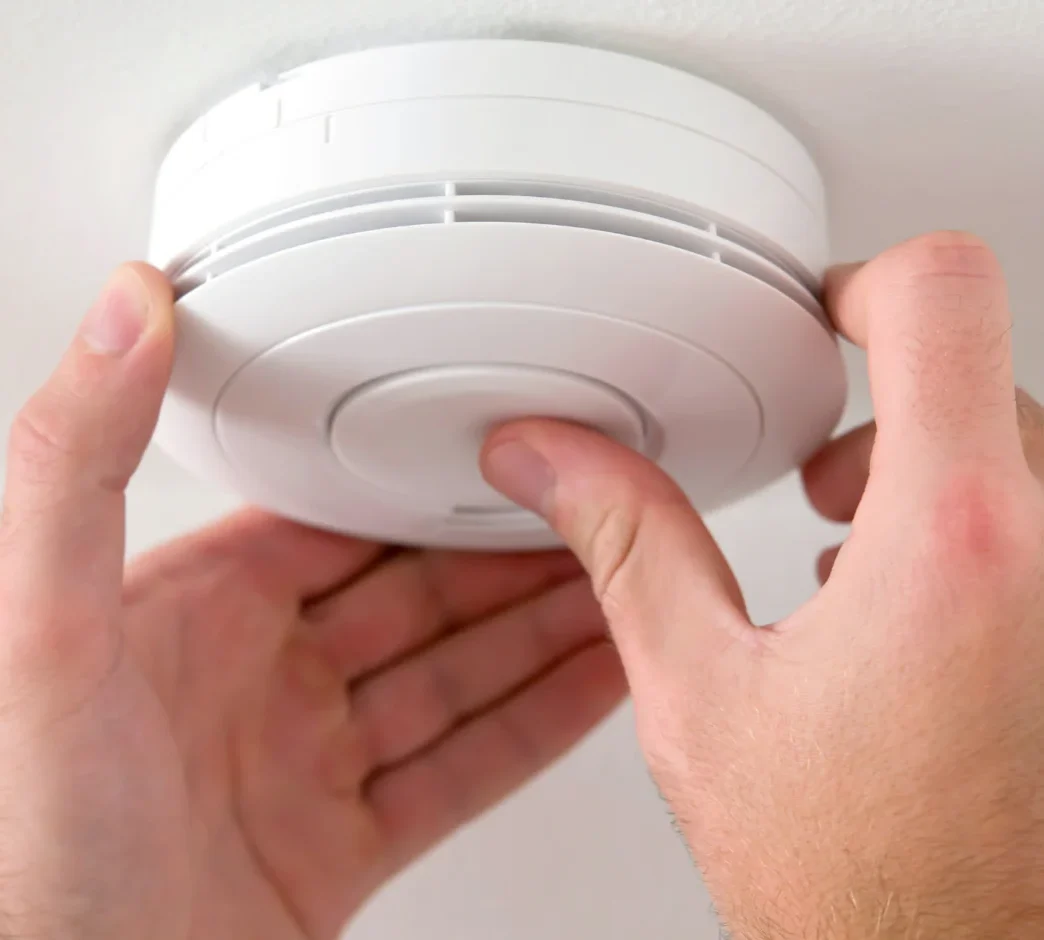
Where should I position my carbon monoxide alarm?
If you have a wood-burning stove, open fire or any other fuel-burning appliance in your home, a Carbon Monoxide (CO) alarm is essential. But where you position it makes a big difference to how well it protects you.
As a chimney sweep working across Huddersfield and the surrounding areas, this is one of the most common questions we’re asked. Below is clear, practical advice based on HETAS guidance, explained in plain English.
Why Carbon Monoxide alarms are so important
Carbon Monoxide is a poisonous gas produced when fuels like wood, coal, gas or oil don’t burn properly. You can’t see it, smell it or taste it — which is why it’s often called the silent killer.
A CO alarm provides an early warning if dangerous levels build up in your home, giving you time to act.
Where should a Carbon Monoxide alarm be fitted?
In the same room as the appliance
HETAS guidance states that a carbon monoxide alarm must be installed in the same room as any fixed fuel-burning appliance, such as:
Wood-burning stoves
Multi-fuel stoves
Open fires
Boilers (where required)
This ensures the alarm can detect carbon monoxide quickly.
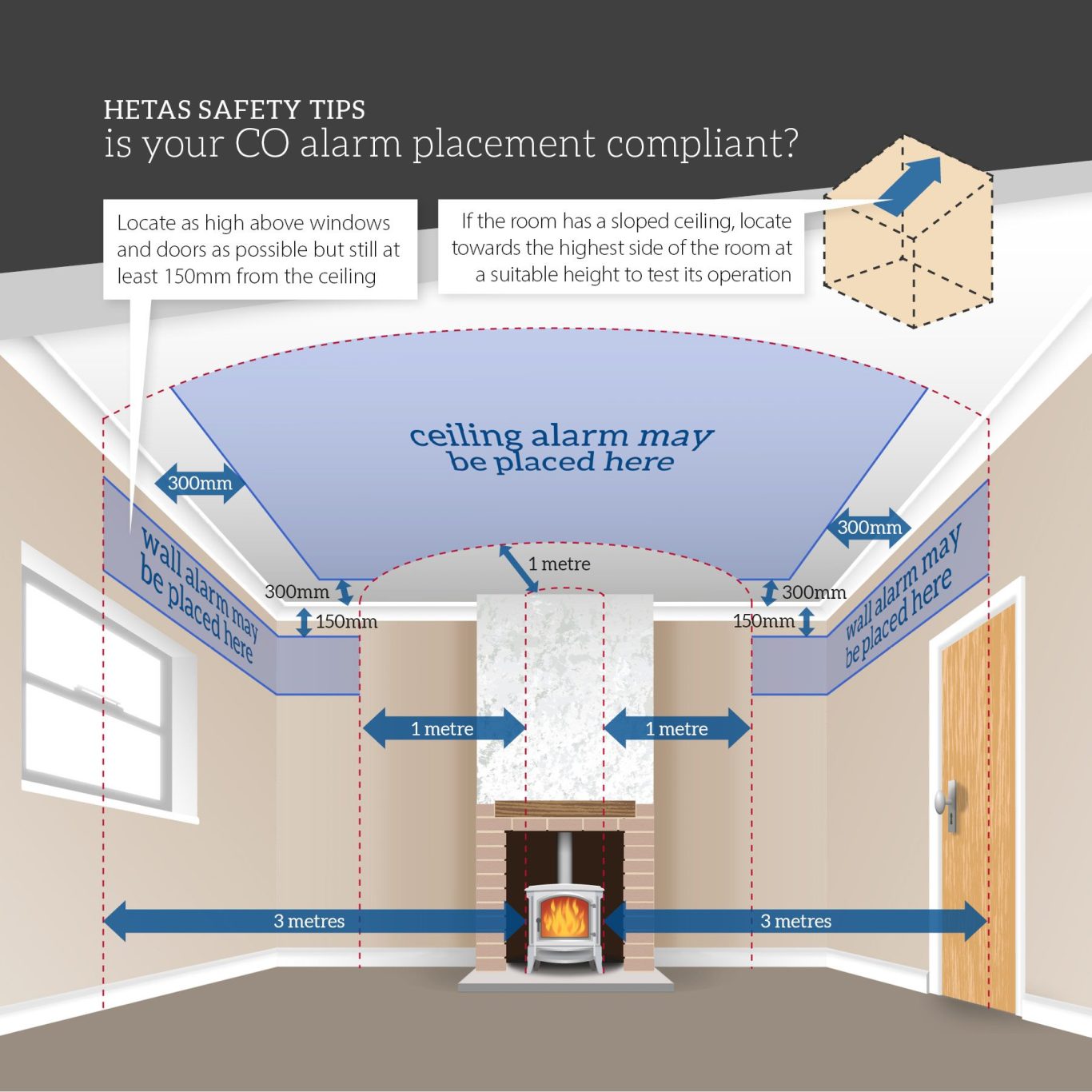
*Image source - HETAS
Correct distance from the stove or fire
The alarm should be:
- Between 1 and 3 metres horizontally from the appliance
- Not directly above the stove or fireplace
If it’s too close, heat can affect the sensor. Too far away, and detection may be delayed.
Wall or ceiling? Both are fine
Because Carbon Monoxide mixes evenly with air, alarms can be positioned either on the wall or ceiling:
- Wall-mounted: as high as possible, but at least 150mm below the ceiling
- Ceiling-mounted: at least 300mm away from any wall
Always follow the manufacturer’s instructions as well as HETAS guidance.
Where not to position a CO alarm
Avoid placing your alarm:
❌ Directly above a stove, fire or boiler
❌ On a mantelpiece
❌ In cupboards or behind furniture
❌ Next to windows, doors or extractor fans
❌ In dead corners where air doesn’t circulate
Poor positioning can stop the alarm working correctly when you need it most.
Common Carbon Monoxide alarm questions
Do I need more than one CO alarm?
If you have more than one fuel-burning appliance, you should fit an alarm in each relevant room. Many homeowners also choose to fit one near bedrooms for extra peace of mind.
How often should I test my CO alarm?
Test it once a month, and always after changing batteries or returning home from a long period away.
How long do carbon monoxide alarms last?
Most CO alarms have a lifespan of 7–10 years. Check the expiry date on the alarm — an out-of-date unit won’t protect you properly.
Is a CO alarm a replacement for chimney sweeping?
No. A CO alarm is a safety back-up, not a fix. Regular chimney sweeping and appliance servicing are essential to reduce the risk of carbon monoxide being produced in the first place.
At Swept, we regularly see alarms that are poorly positioned — sometimes only inches from a stove, or tucked away where they won’t work effectively.
Correct alarm placement, combined with regular chimney sweeping and stove maintenance, is the best way to protect your home and family from carbon monoxide risks.
If you’re unsure whether your alarm is in the right place, feel free to ask when we’re next sweeping your chimney.
Contact Swept. Chimney Sweeping Services with any queries.
Written by Gary Walker
Gary, owner of Swept. Chimney Sweeping Services in Huddersfield, is a HETAS trained and approved chimney sweep, co-founder of GD Logs (www.gdlogs.co.uk), and an award-winning direct marketing expert. Raised on a small holding with a passion for wood burners since the 80s, Gary is City & Guilds NPTC qualified in Chainsaws and Tree Felling. He advocates for sustainable heating fuels and possesses a passion for wood burning stoves.
Next blog: Top tips for keeping your stove glass sparkling clean